
Trenchless repair · Oviedo, FL
Dig or Line? Trenchless Pipe Lining and Relining in Oviedo, FL for Cracked or Rooted Sewer Pipes
Lining a pipe from the inside can spare a lawn, a driveway and a patio, but it only works on pipes in the right condition. Call Oviedo FL Expert Plumbers to talk through your camera findings, and use this page to learn what has to be true before lining is a sensible choice.
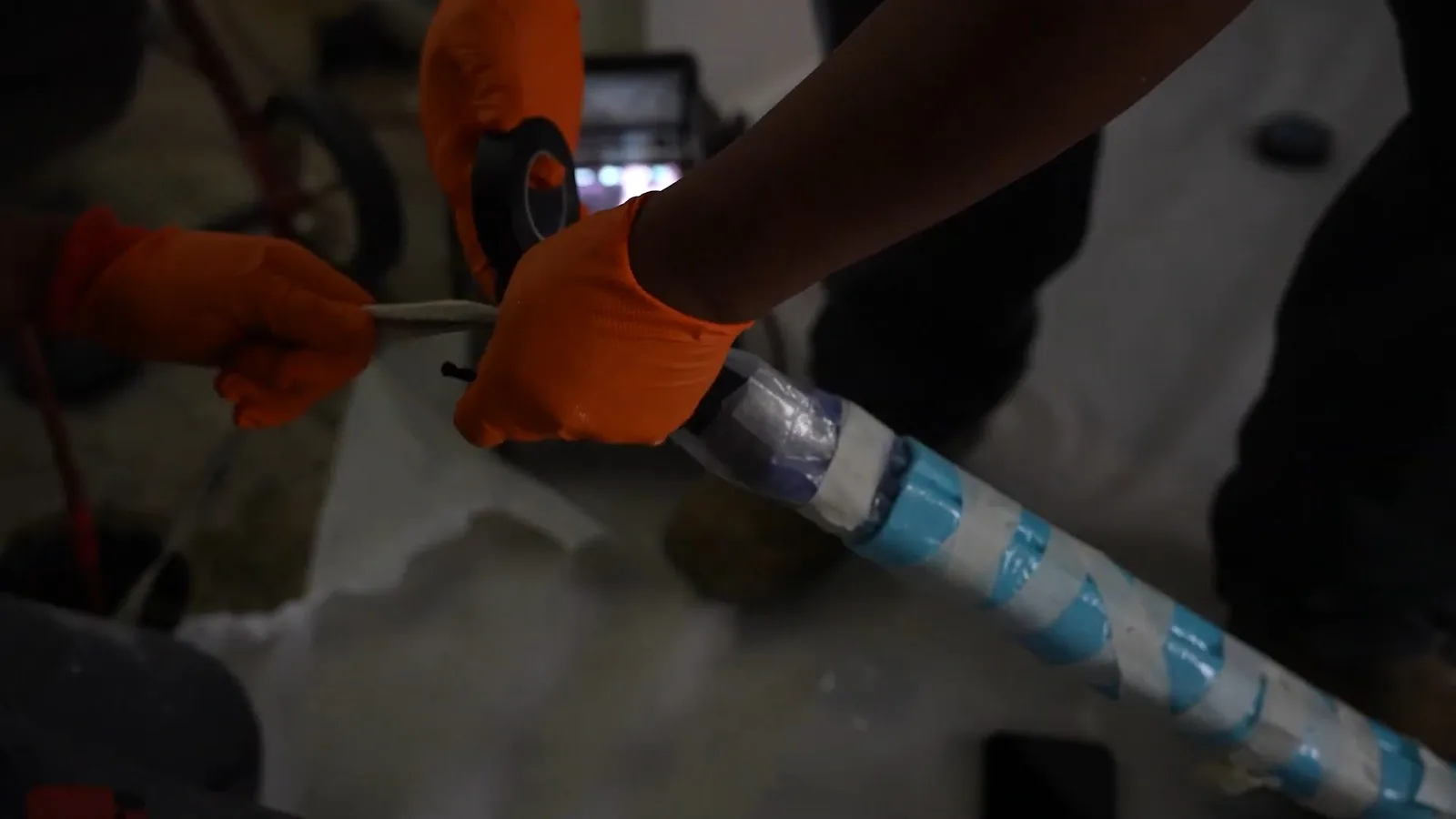
How lining works, and when a pipe does not qualify
In a lined repair, a resin-soaked tube is pulled or inflated inside the old pipe and cured so it hardens into a new pipe within the old one. The yard is opened only at small access points. The result depends on the pipe's condition when the liner goes in.
Lining suits a pipe that is cracked, has leaking joints or has roots at the joints, as long as it is still round and open. It does not suit a pipe that has collapsed, has shifted out of line or sags enough to hold water. A liner follows the shape it is placed into, so it keeps a sag, and the pipe may have to be dug.
- Round, open pipe with cracks or joint leaks: lining is often a candidate
- Roots at joints: the line is cleared first, then assessed for lining
- A sag that holds water, an offset or a collapse: lining alone may not fix it
- A pipe that cannot be cleaned or passed by a camera: ask what is blocking it
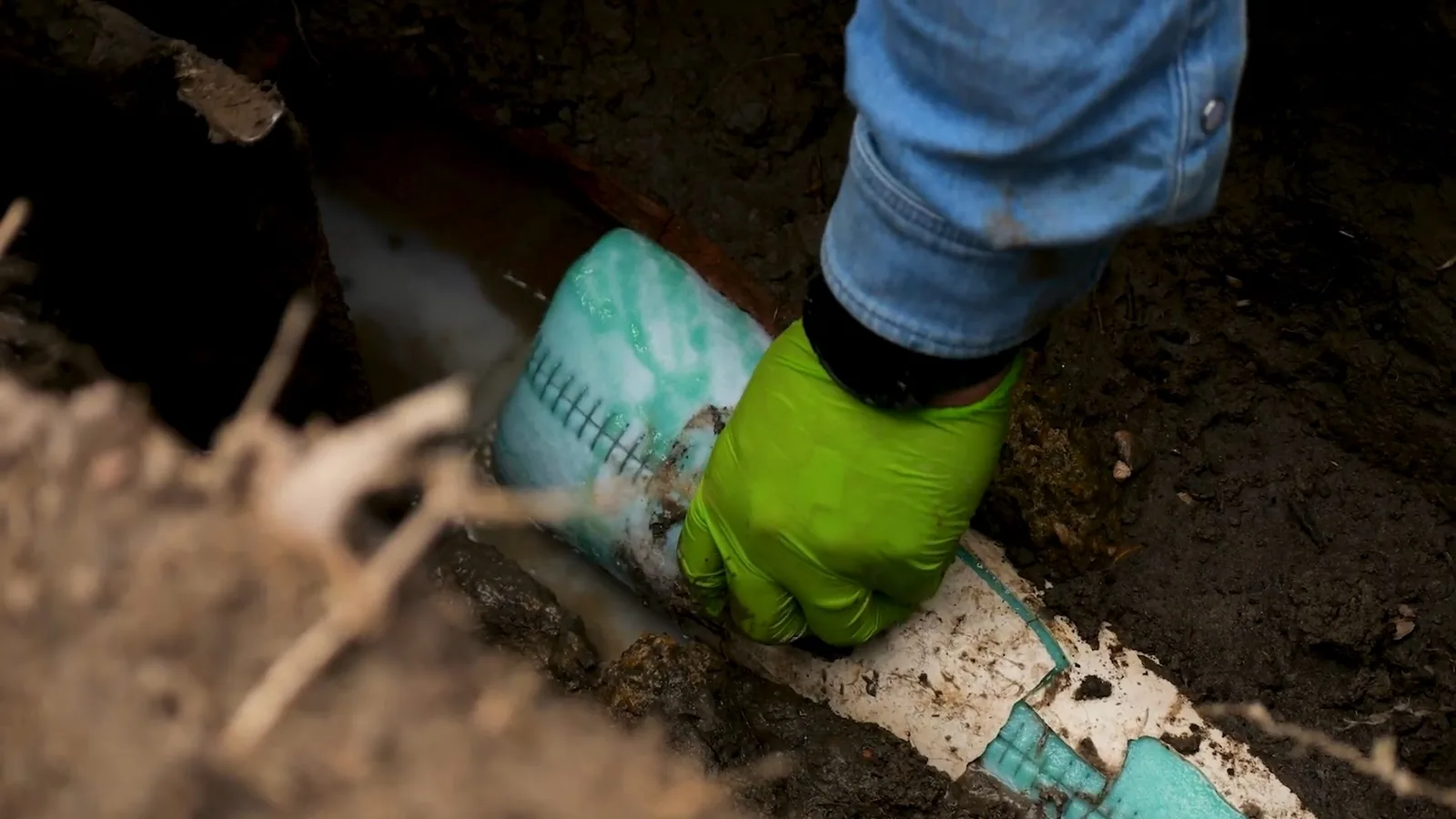
Lining, bursting or open trench: how the three approaches compare
| Approach | What it involves | Best fit, and the trade-off |
|---|---|---|
| Open trench | A trench along the pipe, then new pipe | Collapsed, sagging or badly offset pipe. Most disruption to yard, driveway and landscaping. |
| Lining | A cured liner inside the old pipe | Cracks and leaking joints in a round pipe. It does not correct a sag, and the bore is slightly reduced. |
| Pipe bursting | A new pipe pulled through as the old one is broken | A failed pipe that can be replaced along its path. Needs entry and exit pits and is not suited to every pipe or soil. |
Ask the plumber to explain why one approach was chosen over the other two. A plumber who can only offer one method may recommend it because it is the only one they do.
Questions to settle before you approve a lined repair
The camera recording is the starting point. It should show the length of pipe to be lined, its material and any sags, offsets or breaks. If you have not had one done, start with the steps in traditional sewer line repair.
- What does the recording show, and where does the damaged stretch begin and end?
- How will the pipe be cleaned before lining, and is that cleaning included in the quote?
- Where will the access pits go, and who restores the ground?
- How are side branches reopened after the liner cures?
- Will there be a final camera pass, and will you get the recording?
Cleaning matters. A liner placed over grease or scale will not bond properly, and a stretch cleared with high-pressure jetting before lining gives a cleaner result than a quick pass with a cable.
Is your pipe a candidate? What to gather before you call
Lining decisions start with evidence, so collect what you have before the call. A plumber can say much more with a recording and a history than with a description of a smell.
- Any camera recording or report from a past inspection
- The approximate age of the house and any earlier sewer repairs
- Which fixtures back up, and how often
- Large trees or shrubs near the line between the house and the street
- Whether the house has a cleanout, and where it is
If you have no recording, the first step is a camera inspection, not a quote for lining. A lining quote written without one is a guess about what the pipe looks like.
Reading a lining quote: what should be spelled out
A good quote leaves little to interpretation. Look for each of these in writing, and ask about any that are missing:
- The footage to be lined and the access points
- How the pipe will be cleaned beforehand
- The liner material and how it is cured
- How side branches are reopened
- A final camera recording, handed to you
- What happens if the pipe turns out not to be suitable once the work starts
That last line matters. A job that starts as lining and turns into a dig changes the price and the yard damage, and you should know the plan before it happens.
Lining versus digging: why the two quotes are hard to compare
Digging and lining often look like different prices for the same result. They are not the same scope. The difference is mostly what happens to the yard, the driveway, the walkway and any irrigation in the path.
Ask for restoration to be listed as its own line in both quotes. A dig quote that leaves out new sod or concrete and a lining quote that includes access-pit repair are not comparable until you put them on the same footing.
Digging is still part of the job: 811, permits and who owns the pipe
Trenchless does not mean no digging. Access pits and any spot repairs need a ticket to Sunshine 811 at least two full business days before ground is broken, under Chapter 556 of the Florida Statutes. Ask who is filing it and get the ticket number.
Ask Public Works at 407-971-5681 which stretch of the sewer line at your address is yours before you pay to line any of it. Ask whether the work needs a permit, and keep the number if one is issued. Whether lining is approved for a given line is a question for the permitting office, not for a web page.
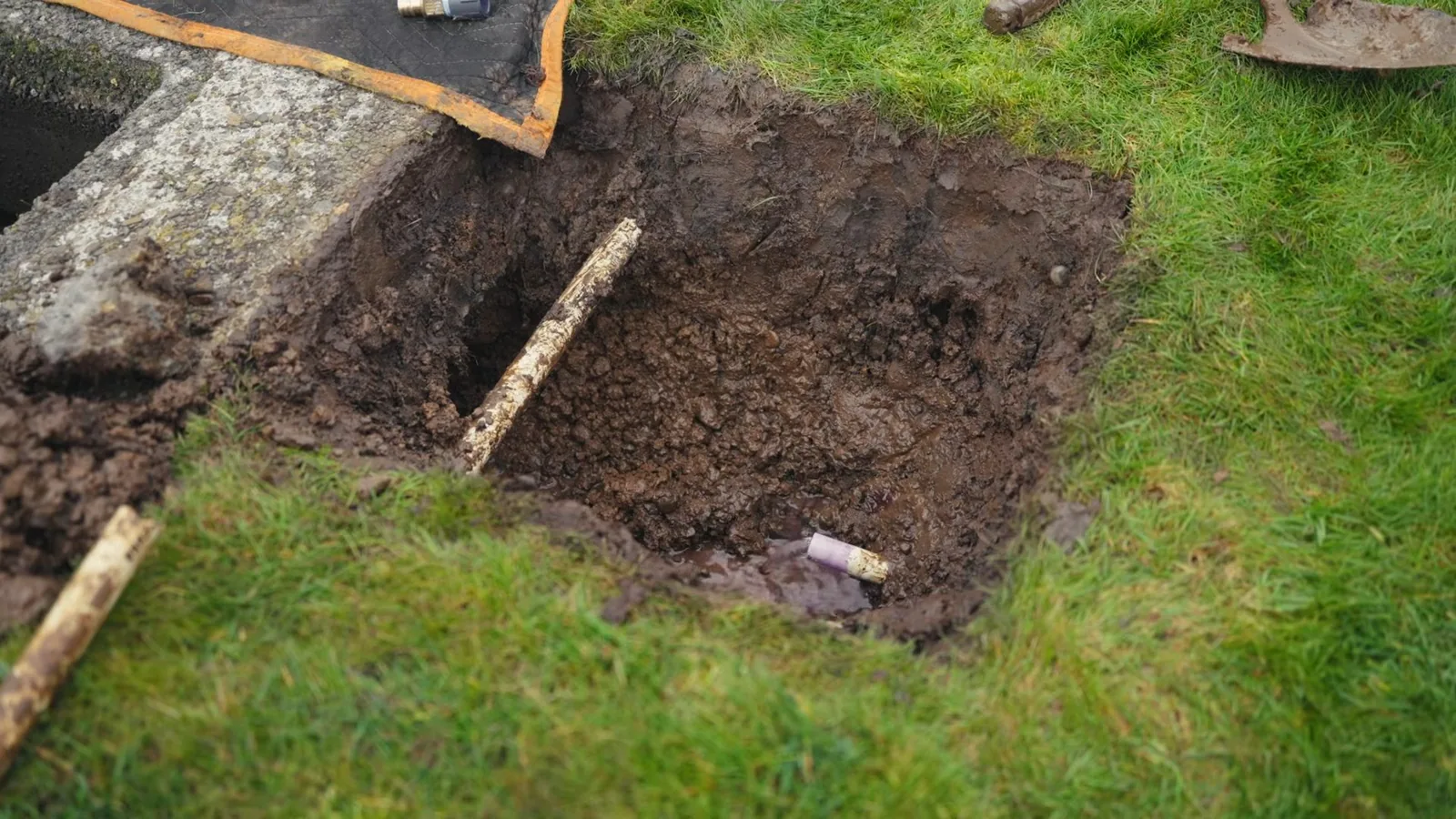
The same idea under a slab: rerouting instead of lining a water line
The no-dig idea also applies to a failed water line under a concrete floor, though the method differs. A water line is usually not lined. It is more often retired and replaced with new pipe routed through walls or the attic, so the floor stays whole.
If your problem is a leak under a slab rather than a sewer pipe, read about rerouting a slab leak line for the choices and the questions to ask. If you are not sure which pipe is failing, a leak assessment comes first.
Bring your camera findings and talk through lining or digging
Call Oviedo FL Expert Plumbers and describe what the camera showed. We will go through what has to be true for lining to work.